Wednesday, April 25, 2012

Former Prime Minister Fraser opposes new US bases in Australia

Malcolm Fraser (left) became Australia's Prime Minister in 1975 a constitutional coup that saw the Queen of England's representative in the supposedly sovereign nation of Australia withdraw the commission granted to the elected Whitlam Labor Government.  Fraser had provoked a crisis by using the Liberal-National Coalition's majority in the Senate to block the Supply Bills that were required to provide money for the Whitlam Government's Budget.

With the support of the Murdoch press, Fraser quite convincgly won the next election and set about dismantling many of the welfare measures enacted by Whitlam, and in particular, the universal health care scheme Medibank.  he also tightened the penal provisions against industrial action.

With his rich squatter background, and his aloof patrician demeanour, Fraser further alienated working class Australians when he infamously said in parliament that "Life wasn't meant to be easy".

Although he lost the 1983 election to the former head of the Australian trade union movement, Bob Hawke, he had taken several steps that revealed a certain far-sightedness as a member of the ruling class.  He introduced land rights legislation to pacify Aboriginal and Torres Strait Islander activists who were becoming more militant and directing their political anger at giant multinational pastoral and mining companies.  And he took a stand against apartheid in South Africa and against white minority rule in Rhodesia, now Zimbabwe.

In recent times he worked closely with Gough Whitlam, his former political adversary, on issues ranging from the argument for a republican Australia to the humane reception of asylum seekers.  He was openly critical of John Howard's neo-liberalism.

Fraser's latest comment, below, has been taken from the Fairfax press, and follows a submission to a Government White Paper on Australia's relations with Asia in which Fraser stated that if Australia continued to be "a compliant ally of a virtually defeated super-power", then it risked "being taken as a prize by China".

All of which underscores the contemporary validity of Lenin's method of exploring the contradictions between imperialist powers for the redvision of the world into spheres of influence, sources of raw materials and markets for the export of capital. So long as imperialism exists, warned Lenin, so does the danger of war. 

US Marine 'Base' Is a Mistake, Says Fraser


The Age (Australia)

Tuesday, April 24, 2012


THE former Liberal prime minister Malcolm Fraser (above) says the new American marine "base" near Darwin is a mistake, and that Australia's grovelling to Washington is hampering ties with Asia.


In a strongly worded submission to the federal government's white paper on future relations with Asia, Mr Fraser has criticised Australia's subservience to the US as a product of misguided assumptions America offers a security guarantee.

"Over 20 years now we have given the impression of doing that which America wants," Mr Fraser writes.

"We seem to believe that our security can be best assured if we do what we can to win brownie points with the US. This is a mistaken assumption.

''No country can really win brownie points with great powers. Great powers follow their own national interests and we should follow ours."

Mr Fraser is highly critical of the deployment of US marines in the Northern Territory, saying it fuels Chinese concerns over a policy of containment. He also dismisses claims by Labor and the Obama administration that the presence of the marines does not amount to a "base".

"For America to say that 2500 troops do not constitute a base is nonsense, indeed a fabrication," Mr Fraser writes.

"In military terms, a base does not have to be bricks and mortar. If  2500 troops are stationed in a particular place then the language makes it quite plain that they are based in that place. It is a base.

"To say that they are just passing through and that it is not a base is deceptive and misleading. It sends the wrong message, not only to China, but to countries like Indonesia."

He told the Herald he was also concerned Australia would lose more of its independence in Asia should the US turn Cocos Island into a base for unmanned surveillance drones, as reported last month in The Washington Post.

The Prime Minister, Julia Gillard, commissioned a white paper last year guided by the former head of Treasury, Ken Henry, titled Australia in the Asian Century.

Mr Fraser said he had only decided to put his thoughts on paper after the marines' presence in Darwin was announced and reports of plans for a US military presence in the Cocos Islands emerged.

In his submission, he said he was not against the US alliance but for Australian independence.

He said in assessing what to do in the future, Australia should conscious of our history and a dependence on Britain before World War II: "We believed that Britain would be able to secure our future," he writes. "It never occurred to us that Britain would be so preoccupied, so beleaguered, that in a situation of emergency she would not be able to help."


Thursday, March 29, 2012

Gina Reinhart shows wealth no obstacle to ignorance

Gina Reinhart has taken to poetry to express her embrace of multiculturalism and migrant workers.

It is genuine humanitarianism at its finest, and has nothing to do with Australia’s richest person’s desire to exploit cheap labour at rates below those paid to Australian workers.

This is part of what Gina wrote:

The Globe is sadly groaning with debt, poverty and strife
And billions now are pleading to enjoy a better life ...
Embrace multiculturalism and welcome short term foreign workers to our shores
To benefit from the export of our minerals and ores.

(From the ABC News website: http://www.abc.net.au/news/2012-03-29/rinehart27s-overseas-worker-push-facing-union-rebellion/3921700 ).


It is such a fine expression of empathy for the poor in high literary form that it has attracted its own lit crit (http://theworstofperth.com/2012/02/13/la-gina/ ).

Of course, the reason why the “Globe is sadly groaning with debt, poverty and strife” has nothing to do with the accumulation of capital by the 1%.

A workmate of mine has uncharitably responded with a poem of her own:

Gina R, Gina R, who the hell do you think you are
With your mate Twiggy and his driverless trucks
You obviously don’t give two flying fucks
Who’s driving a dozer or wielding an axe,
So long as you don’t have to pay any tax.

She claimed to have been an “award winning” poet, having won a competition at Hamilton Secondary College!

I did point out that I’d beaten her to the gun with this effort that I posted on June 13, 2010:

Twiggy Forrest in his workman's clothes
(With his workman's bank account - as everybody knows!)
Will be forced to live on the bones of his arse
If he's taxed at the level of the working class.

Gina Reinhardt, looking very sad,
"It's all my money - I got it from my Dad";
But that bastard pinched it from the labouring crew -
The work of the many for the wealth of a few.
A resource profit super tax
Such a mild move for all their wild attacks
When we socialise the mines at a later hour
Then we'll see them weep 'cos we'll hold state power.

And we'll dress Mr Twiggy like a working man,
And he can irrigate the desert with a watering can
Which we'll fill forever down the years
With Gina Reinhardt's well-deserved tears!

If anyone else is inspired by Gina “Mother Theresa” Reinhart’s new-found compassion for the wretched of the earth, please hit the comments box below and send it in!


Monday, March 26, 2012

US out of the Cocos Islands!


The US imperialists are placing a further squeeze on their compliant puppets in Canberra.

Not satisfied with the “offer” for US marines outside Darwin, and the promise of access to the Stirling Naval Base outside of Perth, they are nosing around the Indian Ocean territory of the Cocos (Keeling) Islands.

The islands were annexed by the British in 1857 and transferred to Australian control on 23 November 1955 under the Cocos (Keeling) Islands Act 1955 (an Australian Act) pursuant to the Cocos Islands Act, 1955 (a UK Act).

The islands are strategically placed and were the subject of inter-imperialist rivalry in both World Wars.

Today, they are tourist destinations, with pristine shallow waters around two atolls, with some 24 islets. There are no rivers or lakes, and fresh water is drawn from natural underground storage of rainwater.


U.S. and Australian officials said the atoll could be an ideal site not only for manned U.S. surveillance aircraft but for Global Hawks, an unarmed, high-altitude surveillance drone. The U.S. Navy is developing a newer version of the Global Hawk, known as the Broad Area Maritime Surveillance drone, or BAMS, that is scheduled to become operational in 2015. Aircraft based in the Cocos would be well-positioned to launch spy flights over the South China Sea.

That this is an imperialist attempt to circle and contain China is quite obvious.

Like the naval base proposed for Korea’s Jeju Island (conveniently omitted from the map below), it is tantamount to setting up camp on your neighbour’s doorstep and then accusing him of threatening you.


There will be no consultation with the people of the Cocos (Keeling) Islands. But they have an interesting demographic which may not welcome being taken over for aggressive US military purposes.

In 2010, the population of the islands is estimated at just over 600. The population on the two inhabited islands generally is split between the ethnic Europeans on West Island (estimated population 100) and the ethnic Malays on Home Island (estimated population 500). A Cocos dialect of Malay and English are the main languages spoken, and 80% of Cocos Islanders are Sunni Muslim.

The US imperialists are hell-bent on controlling the South China Sea and are making the Chinese out to be the baddies.

For domestic consumption, the Washington Post frames the latest development in these terms: “Although U.S. officials say the regional pivot is not aimed at any single country, analysts said it is a clear response to a rising China, whose growing military strength and assertive territorial claims have pushed other Asian nations to reach out to Washington”.

Look at the map again to see a case of the pot calling the kettle black.

It is the US imperialists who are making assertive claims on Australian (and other) territory to advance the interests of the Empire.

Keep the Cocos clean!

US imperialists out!


Neo Liberalism under attack in China - Introducing a People's Proposal for China by Zhun Lu


(Above: Only socialism can save China - one of a series of posters issued after June 4, 1989)


The March 2012 edition of The Deal, the glossy business magazine of Murdoch’s Australian newspaper revealed that as early as 1980, the year after Deng Xiaoping formally cemented his hold over the Chinese Communist Party, an appeal was made to the World Bank "for help to develop its economy".


The President of the World Bank and major strategist for US imperialism, Robert McNamara, appointed his right-hand man, the Brazilian-born German Caio Koch-Weser "to bring China into the Bank’s development programs as the first step in an engagement that has since transformed the global economy". It has also transformed China, forcing it from the socialist road to the capitalist road and replacing the socialist ideological outlook with the ideology of neo-liberalism which is the most reactionary and aggressive expression of the interests of finance capitalism.


The text that follows is a re-post from the Democracy and Class Struggle blog (see link at the end or in the links column at left).


................................


In 1997, the World Bank published a long report "China 2020" calling for privatization of public owned enterprises and further liberalization of market. There was very little dissent from the Chinese people; in fact, very few of them knew what was going on in the policy making circles. The later history suggests that the Chinese government followed the advice from the World Bank very closely. Not only had the bureaucrats privatized almost all the public owned enterprises, they also provided "market solution" to education, health service and residential housing issues.

Recently, the World Bank and the research institution under the Chinese State Council published a new report "China 2030". This report gives basically the same prescription as 15 years ago. But the reception is different this time. In the World Bank news conference, Du Jianguo, an independent scholar stood up and protested against the structural reform doctrine advocated by the World Bank. He condemned the report as "poison" and demanded the World Bank to leave China. This protest was reported by several independent media and received enormous support from the online communities.

Interestingly enough, just a short while ago, the authoritative People’s Daily published an editorial calling for further reform while acknowledging the potential oppositions as "trivial critics". In the Chinese context, "further reform" in the mainstream media means neoliberal reforms like privatization and marketisation. This article attracted lots of critique from Marxists and the left wing in general, the scale of which is very unusual in the last 20 years.

All these widespread oppositions to the market reform give us a clear signal: the Chinese people are now explicitly hostile towards neoliberalism (even though not all of them have even heard of this term). There are several major reasons worth mentioning. First of all, we "have been there". The last wave of neoliberal reform has laid off millions of workers and destroyed millions of families. The marketisation of education, health service and residential housing made the life of the working class miserable. Second, the leftist movement has grown much stronger since 1990s. Several large leftist websites are more and more visible in public discussions and all of them explicitly oppose the reform plans from the World Bank and the central government. Many grass-root worker/peasant organizations have come into being and they are in nature anti-neoliberalism.


Last but not least, neoliberalism is in crisis all over the world. The recent economic crisis refreshes the memory of those Chinese people whose mentality remained at the "end of history" more than 20 years ago.

These oppositions and discussions gave birth to a People’s Proposal on China’s future development. The first draft was written by a writer on one of the largest online forums in China. Red China website quickly edited them into a concise version. After that, people have been enthusiastically discussing the proposal all over the Internet and have been adding other things. The China Study Club in UMass Amherst (which I belong to) collectively translated the Red China version into English to give people a sense of what the proposal looks like. This achievement is definitely a milestone in the working class movement in China in that for the first time in the recent three decades so many people are consciously questioning the whole program of the ruling class and have begun discussing what they want. The proposal does not use any Marxist terms, nor does it mention socialism, but everyone can see where it is heading towards.

A SIXTEEN-POINT PROPOSAL ON CHINA’S REFORM


1. That the personal and family wealth of all officials be publicised and their source clarified, and all "naked bureaucrats" be expelled from the Party and the government. ("Naked bureaucrats" refers to those officials whose families live in developed countries and whose assets have been transferred abroad, leaving nothing but him/herself in China.)

2. That the National Congress concretely exercises its legislative and monetory function, comprehensively review the economic policies implemented by the state council, and defend our national economic security.

3. That the existing pension plans be consolidated and retirees be treated equally regardless of sector and rank.

4. That elementary and secondary education be provided free of charge throughout the country; compensation for rural teachers be substantially raised and educational resources be allocated on equal terms across urban and rural areas; and the state assume the responsibility of raising and educating vagrant youth.

5. That the charges of higher education be lowered, and public higher education gradually become fully public-funded and free of charge.

6. That the proportion of state expenditure on education be increased to and beyond international average level.

7. That the price and charge of basic and critical medicines and medical services be managed by the state in an open and planned manner; the price of all medical services and medicines should be determined and enforced by the state in view of social demand and actual cost of production.

8. That heavy progressive real estate taxes be levied on owners of two or more residential housings, so as to alleviate severe financial inequality and improve housing availability.

9. That a nation-wide anti-corruption online platform be established, where all PRC citizens may file reports or grievances on corruption or instances of abuse; the state should investigate in an openly accountable manner and promptly publicise the result.

10. That the state of national resources and environmental security be comprehensively assessed, exports of rare, strategic minerals be immediately cut down and soon stopped, and reserve of various strategic materials be established.

11. That we pursue a self-reliant approach to economic development; any policy that serves foreign capitalists at the cost of the interests of the Chinese working class should be abolished.

12. That labour laws be concretely implemented, sweatshops be thoroughly investigated; enterprises with arrears of wages, illegal use of labour, or detrimental working condition should be closed down if they fail to meet legal requirements even after lawfully limited term for self-correction.

13. That the coal industry be nationalised across the board, all coal mine workers receive the same level of compensation as state-owned enterprise mine workers do, and enjoy paid vacation and state-funded medical service.

14. That the personal and family wealth of managerial personnel in state-owned enterprises be publicized; the compensation of such personnel should be determined by the corresponding level of people’s congress.

15. That all governmental overhead expenses be restricted; purchase of automobile with state fund be restricted; all unnecessary travelling in the name of "research abroad" be suspended.

16. That the losses of public assets during the "reforms" be thoroughly traced, responsible personnel be investigated, and those guilty of stealing public properties be apprehended and openly tried.

ORIGINALLY PROPOSED BY Hanjiangchunmeng on bbs.people.com.cn
EDITED BY RED CHINA WEBSITE (http://redchinacn.com)
TRANSLATED BY CHINA STUDY CLUB IN UMASS AMHERST.

Thursday, March 08, 2012

US out of Jeju Island!

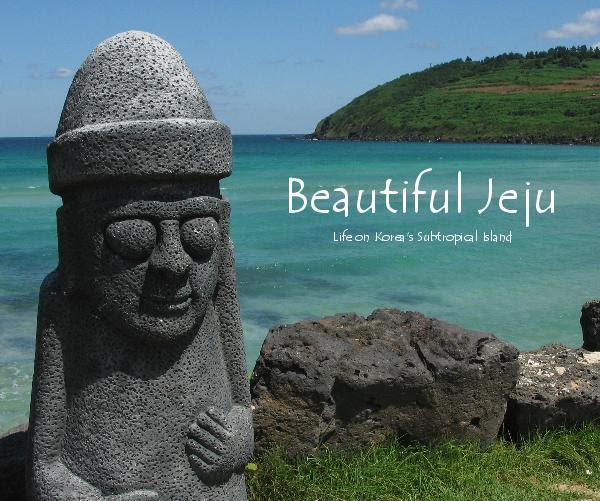
(Above: Tourism industry promotion of Jeju Island)

South Korean authorities have moved against the people of Jeju Island to begin blasting the precious Gureombi coastline to make way for a naval base to serve the US imperialists. The first round of detonations began on the morning of March 7 2012 in Gangjung (also known as Kangjung), a village on the southern coast of Jeju

The blasting was to have begun on November 18 last year, but permission was refused by the island’s Governor Woo after local residents gained international support for a campaign to stop the blasting and the base.

On this occasion, Governor Woo has also denied permission for the blasting, but this has been ignored by the authorities.


(Above: location of proposed blast sites along the Gureombi coastline)


Background

Jeju Island lies just off the southern-most tip of the Korean peninsula. It lies in pristine waters containing beautiful coral reefs and is an iconic and beautiful setting for peaceful traditional industries and tourism. It was recently voted one of the New Seven Wonders of the World and has a World Heritage Listing.


For several years, its people have been waging a mass struggle against the building of a naval base, to be used by both the South Korean and US navies.


The interests of the US imperialists lie in the strategic positioning of the island which oversees the shipping lane used by China for 80% of the oil it imports by ocean tankers.


Heroic struggles repressed by South Korean regime


More than 95% of the residents of Jeju Island oppose the construction of the naval base.
They have a long history of resistance to occupation by, amongst others, China’s Yuan Dynasty, the Japanese militarists and US imperialism. In 1948 more than 80,000 islanders were massacred by the Syngman Rhee fascist clique following their usurpation of power and decision to divide Korea.


In deciding to oppose the naval base, the Jeju island residents point to the apology they were given five years ago by South Korea for the 1948 massacre. At the time, the government declared Jeju an “Island of Peace”, hardly compatible with the forced imposition of a naval base to serve the interests of US imperialism.


For the past four years, the Jeju people have maintained a protest site at Jangjeong Village adjacent to the proposed naval base.


On May 19 2011 the police and the military attacked the protest site and arrested eight of its leaders. However, the residents protected their site and its banners.


Then, at the crack of dawn on Friday 15 July undercover police arrested three more leaders of the resistance and declared that 76 others were banned from public waters or land near the Joongduk coastline where the base will be constructed.


Gangjeong Village Chief Kang Dong-Kyun, one of those arrested in the dawn raid, was fined $5,000 for each violation of an order requiring the removal of all facilities from the protest site.

US imperialism’s aggressive posturing against China

US imperialism is a declining economic power but is still the world’s No. 1 superpower. That is a dangerous mix.


US imperialism wants to threaten and intimidate China.

This is how a Stratfor analysis presented the matter a couple of days ago:

China also faces a primarily military problem. China depends on the high seas to survive. The configuration of the South China Sea and the East China Sea render China relatively easy to blockade. The East China Sea is enclosed on a line from Korea to Japan to Taiwan, with a string of islands between Japan and Taiwan. The South China Sea is even more enclosed on a line from Taiwan to the Philippines, and from Indonesia to Singapore. Beijing's single greatest strategic concern is that the United States would impose a blockade on China, not by positioning its 7th Fleet inside the two island barriers but outside them. From there, the United States could compel China to send its naval forces far away from the mainland to force an opening -- and encounter U.S. warships -- and still be able to close off China's exits.

(George Friedman, Assessing China’s Strategy, March 6, 2012)


(Above, elderly resident vociferously opposes the blasts and the base. Below, a group of Jeju Island grandmothers join the protest)


Build respect and understanding, not US bases

The blasting of Gureombi is an act of great environmental vandalism and fails to respect the wishes of the people of Jeju Island. At the present time, US imperialism is working through loyal allies in the region, including, regrettably, the government of my country Australia, to build up its military presence in the Pacific region. This is unwelcome and destabilises our region.


We want to see friendly relations based on mutual respect and understanding in our region, not increased military tensions based on vainly trying to maintain the privileges and power of the declining United States. The US risked nuclear war during the Cuban Missile Crisis. They would not like it if the Chinese Navy built a base in Cuba either. So why do they think the Korean and Chinese peoples want them to build a base for US Navy Aegis missile destroyers and aircraft carriers on Jeju Island?

We want to see respect for our global environment and particularly for the treasured coastline of Gureombi.


(Above: nuns blockade the road to be used by contractors employed to carry out the blasting)


(Above and below, heroic residents defend th coastline against the police)


“Free trade” backed by gunboat diplomacy

The Korean people are also incensed that their economic interests are being taken away in the name of “free trade”. As the online Korea Times (a pro-government and pro-US publication) wrote on March 8:

“It is regrettable to see the nation sharply divided over the plan (for the naval base on Jeju Island). The controversy is among hot-button campaign issues such as the Korea-U.S. free trade agreement (FTA). The main opposition Democratic United Party (DUP) has already threatened to revise or nullify the trade deal if it takes power.”


(Above and below: police deployed against the people)


We support the Jeju residents, environmental activists, and opposition lawmakers say the naval base will make residents vulnerable to potential military skirmishes and destroy the island’s natural beauty.

US imperialism out of Korea!
For friendship and understanding among the peoples of our region!


(Above: police violence will not break the heroic spirit of the Korean people!)


Tuesday, March 06, 2012

Fair Work Act threatens Great Barrier Reef


Climate change, ocean acidification, shipping, and now the proposed mining of coal seam gas are factors leading to the decline of coral cover on the Great Barrier Reef, but it is the government’s industrial legislation, the so-called Fair Work Act, which threatens it with continued destruction.

A recent article, published in the scientific journal Coral Reefs last year, found coral cover on the Great Barrier Reef had declined by up to 50 per cent since the 1960s.

Not sure how a law governing industrial relations can harm coral growth?

This pernicious legislation only allows “protected” industrial action by unions – that is, action during a limited bargaining period in support of a new agreement or award. The action has to be approved and can only relate to “matters pertaining” to the employer-employee relationship.

The Australian government exercises custodianship over the Great Barrier Reef for all of humanity, a fact recognised in the GBR’s listing under all four natural World Heritage criteria for its outstanding universal value.

But the government also exercises state power on behalf of the infamous 1% - the core of which is foreign monopoly capital. In that capacity, the government has declared that coal seam gas developments would have minimal impact on the Great Barrier Reef, an assessment labelled as untrue by the visiting coordinator of the UNESCO World Heritage Centre’s marine program, Fanny Douvere.

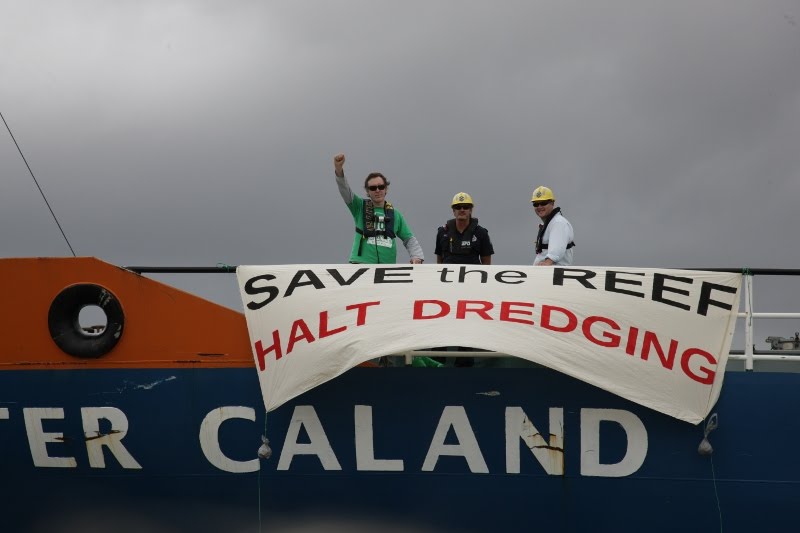
It has also given approval to Gladstone Port Authority to dredge 46 million cubic metres inside the reef's world heritage area over the next 20 years, on the site to facilitate export of coal.


The Australian government invited a delegation from the Centre to inspect the reef after it failed to alert UNESCO's World Heritage Committee of its plans to approve a liquefied natural gas port development on Curtis Island last year.

How can a government, tied in a thousand and one ways to corporate interests and corporate agendas, be forced to take a contrary stand and act in the interests of the people and their environment?

In the past, this has occurred when working people have told them to do it by refusing to lend their labour power to the destruction of their environment.


Take these two examples from Humphrey McQueen’s recently published We Built This Country: Builders’ Labourers And Their Unions (Ginninderra Press, 2011).

Coral battleground 1970

After tenders to drill for oil on the Great Barrier Reef went out during 1969, the Queensland branch levied its members to bring a US expert to testify about the threat to the Reef. In speaking for the proposal, secretary Delaney pointed out that the Queensland Trades and Labour Council (T&LC) and the ALP were the ‘only working-class organisations to interest themselves in the [Royal] Commission’ into the Reef. In July, the T&LC placed a total ban on drilling. Until then, poet and activist Judith Wright had feared that the conservationists had lost. She declared the union action ‘spectacular and unprecedented’. That ban remains spectacular. It also set a precedent. Henceforth, environmentalists hoped that unions would win their battles for them (p. 290-1).

Fraser Island - 1975

In 1975, the Bjelke-Petersen regime allowed mining on the world’s largest sand island. The damage was inflicted by the US construction giant, Dillinghams, the foe of BLs around the world. When Federal Council debated how to save this natural wonder, Queensland secretary Dobinson feared the loss of its perched lakes. Victorian assistant secretary Norm Wallace recalled enjoying the ‘crystal clear lakes above sea level which had outlets but no inlets. There is pure water, clean white sand, good rain forests and beautiful timber. Fraser Island must be preserved’. From Tasmania, Morgan pictured Fraser as the southern anchor of the Reef. All delegates opposed Dillingham’s vandalism. Gallagher urged them to gather support from other unions. The Federation joined the BWIU in banning all Dillingham projects until an official assessment had reported. After visiting the island late in May, Gallagher observed: ‘Experience has taught us that when the pressure is off, companies usually go for maximum profit’ (p. 293).


Both Fraser Island and the Great Barrier Reef were saved by union action which is now illegal under Fair Work Australia.

There is no more urgent task than for people interested in saving their environment to also work for the restoration of the right to withdraw one’s labour as one sees fit!


Tuesday, February 28, 2012

National bourgeoisie must accept workers' leadership

The online Business Spectator has today published a piece that highlights the imperialist domination and control of Australia’s economy.

It does so from a national bourgeois perspective.

Nevertheless it highlights matters that are of critical importance to the anti-imperialist socialist movement. In particular it highlights how US imperialism has manoeuvred itself into an incredibly privileged position with respect to its imperialist competitors and the local capitalist victims of its takeovers (investment targets).

The author, Christopher Tipler, cannot even contemplate a role for us, as the citizens of this country and the creators of its wealth, to provide a solution to the problem that he raises.

Instead, he says that the “answer may be provided by one of the international think tanks working in this field”.

This is consistent with his stand in support of Australian manufacturing. He correctly raises the issue of foreign domination of the economy and its responsibility for the “potentially terminal illness” of Australian manufacturing, but sees the answer in growing capacity among small and medium enterprises and cites the Bavarian “Mittelstand approach of constant innovation, of doing things faster and smarter than competitors” (see http://corpusrios.com/cms-blog-entries/a-german-cure-for-our-dutch-disease.phps ) . This is a little bit like the laying on of hands, a miracle cure that would enable the terminally ill small and medium national bourgeoisie to turn the clock back and regain its youthful vigour.

Tipler must make a study of the reality of state power and let us who work for a living give the lead through mass political struggle and revolutionary activity so that in a socialist, anti-imperialist state manufacturing can be given the protection and support that we need it to have.

.................................................................

Sailing adrift towards productivity
Christopher J Tipler, Management Insights
Published 6:10 AM, 29 Feb 2012 Last update 6:10 AM, 29 Feb 2012

As a strategic adviser I have always believed in the importance of knowing where you are going, or at least where you want to go. This, of course, reflects the fact that businesses exist for a purpose; an over-arching goal is inherent in their makeup. So planning to reach this goal becomes critically important.

Perhaps it is an inappropriate bias, but I tend to assume the same principles should apply at the macro-economic level; that collectively we should have some idea of where we want to go and broadly how we will get there. I suspect I am not alone – that most Australians, if asked, would say that we should know, and hopefully do know, what sort of country we want to be and what sort of economy we need. In this we are deceived as current, long-standing policy settings are completely silent on goals and antithetical to them. This situation is untenable.

At the highest level of population and land use, our governments have refused to be prescriptive; we have no consensus on how many of us should be here, where we should be living or what we should be doing. The implication is that there is no ‘should’. Our approach to economic and industry policy confirms that we are not interested in defining scope and scale dimensions.

The touchstone of economic policy since the mid-1980s has been efficiency, or productivity, to the exclusion of just about anything else. The Productivity Commission which, along with Treasury, is the peak economic policy group, declares ‘productivity isn’t everything, but in the long run it is almost everything’. There is a near-pathological commitment to deregulation, structural adjustment and trade liberalisation so that local and global market forces can determine outcomes. The Productivity Commission believes, for example, that ‘a country gains most of all from reducing its own trade barriers, regardless of what other countries do’.

In all of this there is no hint of a goal, for one obvious reason – the pursuit of goals may well be inconsistent with the pursuit of efficiency. Yet anyone with a strategic orientation understands that efficiency without a goal is of very limited effect. To create a condition of effective intent you must define, and reconcile, both capability and ambition. We must do things right but we must also do the right things. In this more strategic view, efficiency may be necessary but it is not sufficient.

It is important to appreciate the implications of an almost exclusive emphasis on open market principles. An economy is made up of many markets – places where things are bought and sold – and large numbers of buyers and sellers for these things (including international participants). To set these forces loose in a small economy is like tossing a dinghy into a swirling ocean. Who knows where it will go or what will happen to it? The little craft may be inherently seaworthy but it can be swept to somewhere that we never envisaged, or swamped by large waves. Is that what we want?

We might have more influence over our boat’s journey if we decided who could own and sail the craft, but we have eschewed even that. There are almost no effective controls over foreign ownership of enterprises and real estate in Australia. Under current FIRB guidelines a foreign person or entity can buy a business with a value of up to $244 million without the need to gain approval from anyone. If you are American, the threshold is $1.06 billion. Yes, you read these figures correctly - $244 million and $1.06 billion. In the past, even where approval has been required, it has almost invariably been given (rare exceptions relate to the exercise of ‘national interest’ provisions).

We do not know what the level of foreign investment in Australia is, or how rapidly it is growing, as the ABS no longer publishes statistics on this topic. We know that in critical sectors such as manufacturing it has increased substantially. In general, there is very strong interest in buying Australian assets, particularly from Asian investors. The problem here is that overseas-owned companies will always work to an international agenda that may be inconsistent with Australia’s interests.

To top it off, we provide a powerful incentive for our entrepreneurs to sell out, often to international buyers, as only 50 per cent of a capital gain is taxed as income. The ‘smart’ money cashes in to take advantage of this while it can. This is a bizarre anomaly in our tax system.
In combination, the ‘let it rip’ policy trio of efficiency for its own sake, encouragement of overseas ownership and low capital gains taxes is leading Australia into very dangerous waters. In these waters, with no sense of direction, we are a small and vulnerable ship.

Our economic policy settings represent a failure of both imagination and common sense. We must now create a strategic context for policy by balancing capability with ambition; moving from the ‘necessity’ of efficiency to the ‘sufficiency’ of vision and control. This process starts by defining potential scenarios for Australia and testing them through widespread consultation. Answering the question ‘who should do this?’ is not easy. The answer may be provided by one of the international think tanks working in this field.

Christopher J Tipler is a Melbourne-based management advisor and author of Corpus RIOS – The how and what of business strategy. His web site corpusrios.com contains more material on this and related topics.

Thursday, February 09, 2012

Catholic education office lobbies against fairness


(Two views, above, of the Caritas College junior covered area, which won the top award in the 2011 SA Architecture Awards.)


The OECD, hardly a left-wing think-tank, has today issued a report on Equity and Quality in Education. It notes that across OECD countries, the highest performing education systems combine quality with equity. In relation to “choice” it observes that “Providing full parental choice can result in segregating students by ability, socio economic background and generate greater inequities across education systems”.

The release of this report is quite timely given that proponents of school choice in Australia are cranking up their engines in anticipation of the release of the review into the funding of schools led by David Gonski.

One such proponent is the Catholic Education Office.

A few days ago, Caritas College, a Catholic R-12 school in Port Augusta, sent home a letter to parents urging them to “become aware of the funding situation for Catholic schools”. It stated that, on average across Australia, CEO schools received a net income of $10,008 per student compared to a net income per student of $11,132 in government schools. It was silent on the fact that, on average across Australia, other private schools had a net income per student of $13,700.

The Caritas letter (I suspect it is a form letter being sent out by many Catholic schools) states that “Catholic schools have a commitment to supporting all families – no matter what their economic or social circumstances”.

“Suffer the little children of the poor and the marginalised to come unto our Catholic schools”?
I think not.

Before we get onto Caritas, the recent study by Richard Teese mentioned in a previous post, claims that “Private non-Catholic schools are found in low social status areas, but their intakes vary in different ways from the complexion of the area. This is also true of Catholic schools.” He provides summary figures for primary school enrolments across the whole of the nation that show that for the ten years 1996-2006, the percentages of students from the two lowest SES quartiles remained static at 14% and 16% respectively, but that the two highest quartiles rose from 16% to 18% and 21% to 22% respectively (Teese, p.32). Some good Catholic marketing there!

In the secondary sector, there were small increases in the Catholic share of each of the SES quartiles, but the proportions are revealing: from the lowest to highest, in 2006, the Catholic share was 13%, 16%. 19% and 24% respectively. In other words, the Catholic enrol nearly twice as many wealthy students as they do poor students.

Moving from the general to the particular, Teese provides a detailed study of schools in a number of low SES communities in Western Australia and Victoria and concludes that “As socio-economic status rises, an increasing share of enrolments is found in the Catholic school, and conversely as SES declines, an increasing share is found in the public schools (Teese, p. 45)”.

With that background, let’s look at Port Augusta.

Port Augusta is a large regional town with many unemployed and low wage families. It has significant Aboriginal and LBOTE communities and these attract additional funding, so the figures below are not representative of the Australian average. Nevertheless, they raise questions about the social integrity and political agenda of the Catholic school lobby.

Based on student data for 2009, Caritas had a student profile against the SES quartiles (lowest to highest 25% segments of the population) of 61%, 27%, 12 %, and 1%. (For 2010 the figures were 13%, 36%, 29% and 22%!)

This compares with public secondary school and primary schools as follows:

Pt Augusta Secondary School: 83%, 16%, 1%, 0%.


Augusta Pk PS: 97%, 1%, 1%, 0%.


Willsden PS: 92%, 8%, 0%, 0%.

Caritas College, in a community with a large Aboriginal population, had only 5% Indigenous students. It had only 1% of students from a Language Background Other Than English (LBOTE).

Pt Augusta Secondary School had a 36% Indigenous intake, and 24% LBOTE students.

Augusta Pk Primary had a 50% Indigenous intake, and 46% LBOTE students.

Willsden Primary had a 62% Indigenous intake and 83% LBOTE.


(Above, students at Port Augusta Secondary School).

Remember Caritas’s self-serving and sanctimonious claim about Catholic schools serving “all families – no matter what their economic or social circumstances”?

Excluding parent fees and other private sources of income, and on the basis of financial data for 2009, Caritas received government recurrent funding of $8580 per student.

Aggregating the funding for the three government schools to produce a comparable R-12 profile, these schools received government recurrent funding of $13,112 per student.

Whereas the government schools were able to raise some hundreds of dollars per student in fees and other income, Caritas raised an additional $2698 per student for a total net per student income of $11,279.

That is still below the funding received by government schools for the students they cater for in Port Augusta. Perhaps Caritas might have advised its parents that if they wanted more government funds for their children then they should enrol them in the government sector. But in a town like Pt Augusta, white flight is a one-way street.

Instead of bashing government schools for the funding they receive for the "heavier lifting" required to meet minimum standards for disadvantaged students, the Catholic lobby would be better advised to call on its parents to query why other private schools, most of which serve the higher end of the SES profile, should receive even more recurrent funding per student than those in both the Catholic and government systems.


Monday, February 06, 2012

Responding to Kevin Donnelly


Yesterday, Dr Kevin Donnelly placed a piece defending the inequitable schools funding model on OnLine Opinion. His purpose was to undermine the credibility of a research paper by Prof. Richard Teese commissioned by all State (except NSW) and Territory Departments of Education for the Gonski Review of Schools Funding. The Teese paper calls a spade a spade. It is very good. The commissioning governments tried to keep it under wraps but it was leaked to the media. The link to Donnelly’s article is here: http://www.onlineopinion.com.au/view.asp?article=13203 .
The link to Teese’s paper is here: http://www.aeufederal.org.au/Publications/2012/RTeesereport2012.pdf

Donnelly is a prominent conservative academic much beloved of the Murdoch media and often sought for comment by radio and TV personalities.

I responded to Donnelly’s piece as follows:

I wish to thank Kevin for reminding us that facts should not get in the way of a good story.

I’m not referring to his quotation of that old saying, but to the rest of his article.

Donnelly cites OECD research that “proves” that “Australia is one of the most egalitarian countries in the world”. Note that “in the world” includes the A-Z of the world’s poorest countries, from Albania to Zimbabwe. But let’s look at child poverty across the OECD. In Australia 14% of children live below the poverty line (2008 OECD figures), compared to rates like 3.7% (Denmark) 5.4% (Finland) and 7% (France). In fact (if you don’t mind my saying that Kevin), 24 out of the 34 OECD countries had a lower rate of child poverty than Australia.

Donnelly argues that it is “also the case” that the “current socioeconomic status (SES) model of funding” (through which private schools receive Federal recurrent funds) “is based on need”. Yes, and mothers’ milk comes from mothers. So what? Is Donnelly seriously going to challenge the fact that public schools do the heavy lifting, that as a system, public education has a much larger proportion of socially and educationally disadvantaged students than either of the Catholic and “independent” systems? So why should the cost of educating these students benefit non-government schools?

Even if it could be argued that the Average Government School Recurrent Cost is a fair basis for funding non-government schools, how can he defend the “funding maintained” provision that ensures that no private school will lose funding even if the fact is that they should?


Opposition education spokesperson Christopher Pyne’s seat of Sturt is an example. Nine out of the 14 private and Catholic schools in the Sturt electorate have “funding maintained” status in respect of their recurrent funding from the Commonwealth. For example, St Ignatius College was entitled to receive 56.2% of the Average Government Student Recurrent Cost (AGSRC) in 2008, and is maintained at that level despite the 2009-12 entitlement being only 36.2% of AGSRC. On average, there is a difference of 10.7 percentage points between what these schools’ current real share of AGSRC should be, and the percentage at which they are being maintained by the Commonwealth Government’s unfair funding formula.


Donnelly says that “Australian research also proves that socioeconomic background is not the most influential determinant of educational success or failure…” What research? The speciousness of Donnelly’s fact here is immediately obvious when one looks at this qualifying comment: “…equally as important are factors like student ability and motivation, teacher effectiveness, school climate and the quality of the curriculum”. Only a person with a Doctorate would have the insight to disassociate socioeconomic background from student ability and motivation, and those in-school factors that are determined by where and in what community a school is sited.


Another “fact” cited by Donnelly “is that most of the growth in (private school) enrolments over the last 20 years or so has been in low fee-paying non-denominational schools serving less affluent communities.” Yet the Teese study of changes in enrolment shares over the two decades 1986-2006 demonstrates “that the greatest increase in the proportion of students attending private (including Catholic) schools has occurred in high SES localities, while no increase at all has been registered in low SES localities”.


Donnelly writes that “state and federal governments spend millions every year on programs designed to strengthen educational outcomes, especially in literacy and numeracy, for under-performing and at-risk groups of students.” Here he unwittingly endorses one of Teese’s observations, namely that the government funding of choice, by moving more highly achieving students out of the public and into the private system, creates the need for extra funding to address the resultant increase in low achievement in the public system. Research by the NSW and SA education department, and by Teese in Victoria, shows that low SES students do better in schools where there are higher SES students than in schools where there are concentrations of low SES students.


So, to paraphrase Donnelly, who would have believed that the good Doctor would be at it again, trying to justify educational inequality and privilege?

Posted by mike-servethepeople, Monday, 6 February 2012 1:38:44 PM

(Great cartoons by Simon Kneebone, Adelaide).

Thursday, February 02, 2012

Expose the fact of death at work and act to prevent it!

When media personality Molly Meldrum fell from a height at home and was hospitalised with head injuries radio, press and TV covered the story like ants on a chop bone.

Some publicity was to be expected, but this was saturation coverage. The impact of his fall on Meldrum was one thing, but we had to “share” its impact on fans, friends and family, as well as reviewing his status, interests and lifestyle.

Molly’s injuries were severe and unfortunate, but he has lived to tell the tale, unlike another pre-Christmas accident victim, a member of the CFMEU employed by Alinta Energy at the Leigh Creek coalfields.

This death at work was virtually ignored by the media.

It’s not that there wasn’t a story: this comrade had a family, including children, and friends, and their grief was all the more poignant for his death having occurred the day before Christmas.

But the capitalist press gets no mileage for the class it serves by publicising death and injury at work. Rather than appearing as stories in the press, these incidents are “disappeared”. At most there is a passing reference to an “industrial accident that claimed a man’s life”, but no exploring the circumstances, no use of the power of the press to tell the human story involved so as to pressure the capitalist class and its managers to clean up their act and stop killing workers.

The Leigh Creek man was operating a 30-year old hydraulic excavator. The machine operates 24 hours a day, so compared to a machine operating on an eight-hour shift, its effective working age was around 100 years.

Safework SA has yet to deliver a report on the state of the machine, but it would be a safe bet to say that they had not inspected it, or had not done so recently.

That was the case with the metal borer that caught and killed young Daniel Madeley in 2004. It had never been inspected. Even as late as 2010, and despite having discovered that there were 78 workplaces which operated borers in SA, the SafeWork SA inspectors had only managed to visit seven.

At Leigh Creek, a turbine on the excavator overheated and burst, spilling hot oil onto the operator who was then immolated. Suffering severe burns, he was airlifted to Adelaide, but died in hospital.

Five days before, a 58 year old man was killed at a stockfeed manufacturing business at Kapunda when he was hit by a large shuttle used to transport hay bales across the site.

The press treated this tragedy in the same way – with indifference.

The working class is not expendable. The life of each working person is precious.

The requirement for safety at work is a set of understood safe operating procedures that take priority over production for profit.

And the foundation of safe operating procedures around machinery is regular and thorough maintenance and repair despite what this may mean in terms of capital costs and interruptions to production.

No more deaths at work!

Sunday, January 29, 2012

Hands Off Kim Sattler!

(John McTernan and The Thick Of It's Malcolm Tucker. See below for the link...)


Kim Sattler is Secretary of Unions ACT and is the person who is being hung out to dry by Julia Gillard in the wake of the stupid decision by her security staff to rush her in a wedge of copper heavies to her car.

Sattler had been tipped off by Gillard’s press secretary Tony Hodges to the effect that Opposition leader Tony Abbott had made remarks indicating that there was no future for the Aboriginal Tent Embassy which was celebrating its 40th anniversary. She was also told that Abbott was at a function with Gillard at a nearby restaurant.

Kim is well-known to have close links with the Aboriginal Tent Embassy. The information she was given by the Gillard staffer was obviously meant to be passed on to the hundreds of people at the Tent Embassy with the aim of making Abbott a target of their complaints and that expressed in the form of some sort of anti-Abbott protest.

Kim took the advice she was given in good faith and passed it on as any supporter of the Tent Embassy would have.

As intended, a group of people from the Tent Embassy rushed across to the restaurant and demanded that Abbott come out and speak to them about his comments.

When Abbott declined to do so, they began hammering with the hands on the windows of the restaurant and chanting.

The capitalist press whipped this up into reports of a “riot” and deplored the “violence” directed, as a result of the security over-reaction, at Gillard who was photographed minus a shoe and stumbling – not from the actions of any protester – but because of the way her security was bustling her to her car.

I wasn’t there, so I can’t give an eye-witness account.

But these people were, and here is what they say. From a contributor to Inymedia:

Not for the blink of an eye were Julia Gillard and Tony Abbott so much as threatened, even less endangered, on the 26th of January by demonstrators from the 40th anniversary Aboriginal Embassy camp in Canberra.


The only violence came from a young copper who punched and choke-gripped a young painted up Aboriginal man, a young Aboriginal woman, an SBS cameraman and I believe one other person standing harmlessly near the restaurant side exit through which clumsy security men rushed out Gingeralla, causing her to lose that now famous blue suede shoe. The only “violence” from the demonstrators I’m aware of was a punch by an activist to the copper who had roughed up the woman without cause. “I won’t stand for any man doing that to a woman,” he told me, showing me bleeding chapped knuckles that must have connected with something metallic on the copper. Nothing would have been easier than to just form a corridor of two lines of coppers for the PM to calmly walk though to her car.


It went the rounds of the protest encampment that that choke-gripping copper is the son of Canberra’s police chief. True or false – I don’t know. But one can imagine that someone from such a stable might think they’re above the law and can do anything with impunity.

Violence from us? Rubbish. I stood close to a handful banging for a while with their hands on the about 2cm-thick glass walls of The Lobby restaurant, part of a group of about 50 making a lot of noise. A bit of noise is enough to spook our two top political leaders and agents guarding the prime minister? No wonder the Americans commented gleefully, can’t they even protect their prime minister?


Violence? How about this for potentially disastrous violence: One copper in the line pushing us back was seen unbuttoning his pistol holster. Another copper had his hand on his taser weapon. A third had his truncheon extended. We heard no order given for any of this. We did, though, see a lot of frightened young faces in that blue-black line advancing on us. The Australian Federal Police said its officers lost control and had no choice but to bustle Gillard and Abbott away in the prime minister’s car. Lost control over 50 noisy but otherwise peaceful demonstrators with almost the same number of police there?


And the story above is corroborated by this account from a website covering current affairs in the ACT:

Rod and I were at the Embassy and I must explain what happened to counteract the fantasy many in the media have created regarding the so-called riot. Media in Australia are often pathetic in their requirement for the sensational - if it isn't, they will make it up.

We were all listening to the speeches by the elders when they were interrupted by the news that Tony Abbott was at a function close by and had called for the Aboriginal Tent Embassy to be torn down. This, of course, did not win him many friends in the gathering. From what I gather, a group of five or six walked across the rose garden to the restaurant that was called The Pork Barrel Café on the sandwich board outside but was really called The Lobby. The group asked to speak to Tony Abbott but he wouldn't come out so the group told him through the surrounding windows how they felt about what he'd said.


It was at that point that Julia Gillard's security people began to panic. Instead of formulating a plan to get her and Abbott out of the restaurant with as little fuss as possible which would have been quite easily done, they instead called the police - local and federal - and then pushed and dragged the PM in a flying wedge toward her car. The crowd of people they pushed and dragged her through consisted of media and security. That's when the PM lost her shoe. Michael Anderson was knocked to the ground on the same steps and several others in the group were manhandled by the police.


The PM was never in any danger, there was no riot. By the time the rest of the people came across to see what was going on, the PM was long gone and Abbott too. Rod and I arrived to see a police cordon across the street - blocking it as well as police cars at the other end blocking that. If a riot had occurred they would have had us like fish in a barrel. There was a bit of shouting by individuals but the police never moved - just looked grim and menacing - no one was arrested. I saw a cop unclip his gun holster and put his hand on his freed gun and it occurred to me that the police might not need much to lose their cool. Rod was just walking forward and I warned him about the gun and the mood of the police.

The leaders from the Tent Embassy called for everyone to go back to the site and people began straggling back.

So much for a “riot”!

Then it was revealed that Gillard’s press secretary had resigned.

That was a bad look for Gillard and her office - that the so-called “riot” had been initiated by her team to get at Abbott.

So someone must have suggested that the blame be placed elsewhere. Anything to take the heat off Gillard.

That was when Kim Sattler received a phone call from John McTernan, the former Blair adviser appointed to manage Gillard’s communications strategy.

I give some background on McTernan in an earlier blog post here: http://mike-servethepeople.blogspot.com/2011/09/gillards-spin-doctor-wont-cure.html .

Elsewhere (see: http://www.thepowerindex.com.au/power-move/gillard-to-get-media-makeover-from-a-whip-cracking-spinner/20110925455 ) he has been linked with the character Malcolm Tucker, from the excellent BBC series The Thick Of It.

According to Sattler, McTernan phoned her to say that she would be named as the person who had given the information about Abbott to the Tent Embassy people.

Sattler told McTernan she had a right to privacy.

“He said, ‘Well, we are going to release your name’. He said, ‘We’re going to have a press conference and we are going to name you’”, reported Sattler.

The she accurately described herself as the meat in the sandwich, as the messenger that was being shot.

Now, I’ve got to admit that I knew Kim a long time ago when she was living in Adelaide.

I haven’t seen or spoken to her for years, but I hear of her from time to time and I know that she is an absolutely genuine supporter of the working class and of progressive causes, which is more that can be said of either Gillard or Abbott.

So I say “Hands off Kim Sattler”.

She doesn’t deserve to be sacrificed to the capitalist media by Gillard’s team of spin doctors just to get a totally unprincipled traitor to whatever the Labor cause might mean these days, off the hook.

Long live the Aboriginal Tent Embassy!

For a Treaty and a new Constitution!

Monday, January 09, 2012

Great news: capitalism to lurch to new crises in 2012


The world crisis of capitalism will continue and deepen in 2012.

This is not the view of Marxists alone, but of many bourgeois economists and finance capitalists as well.

For example, Bill Gross, co-founder and co-Chief Investment Officer of the US multinational PIMCO (Pacific Investment Management Company) stated on January 6, 2012 that the “financial markets and global economies are at great risk” (Gross, Paranormal Economic Activity).

Gross should know: PIMCO oversees investments totaling more than $1 trillion on behalf of a wide range of clients, including millions of retirement savers, public and private pension plans, educational institutions, central banks, foundations and endowments, among others.

While world attention continues to focus on the eurozone countries, the fact that the United States is a geographically separate entity can no longer mask the intricate web of financial ties between it and Europe. Ultimately, the buck still stops in the USA.

Contradictions within the eurozone will continue to unravel. As economic commentator Stephen Bartolomeusz commented on January 9, “If the eurozone were to splinter, deep holes would be gouged in bank balance sheets across the region, requiring more massive taxpayer bailouts from economies that can’t afford them.”

The logical inference of his observation that capitalist “economies” can no longer “afford” to bail out the rich is that further attacks on the people are on the agenda.

Karen Maley, writing in the same day’s Business Spectator, pointed out that “eurozone countries will not be able to fall back on government stimulus packages to get their economies moving. Instead, economic activity will contract sharply as governments embark on a draconian tightening of budgetary policy aimed at eliminating budget deficits that range between 2 per cent and 12 per cent of GDP.”

“Draconian” indeed! As if the belt tightening imposed by the speculators and their governments have not already been draconian enough.

But with repression comes resistance. Rich lessons have already been learned throughout 2011 in all areas where capitalism and imperialism are in control. Or, based on the above, out of control.

Bring on the further unravelling of the crisis.

Away with the private ownership of the means of production, distribution and exchange…..


Wednesday, December 14, 2011

Cleaners Rising Up


Cleaners around the country are some of the most lowly paid and precariously employed members of the working class.

For several years, United Voice (formerly the Liquor, Hospitality and Miscellaneous Workers Union or LHMWU) has been organizing these workers in its Clean Start campaign, winning impressive victories around some of the capital cities’ CBDs.

Now the campaign is getting out to major shopping centres in the suburbs.

A case in point is the Chadstone Shopping Centre in suburban Melbourne.

Like workers throughout the cleaning industry, Chadstone workers have been subjected to an intensification of their labour by their profit-hungry bosses, putting the public at risk as short-cuts are taken particularly around toilets and food courts.


Gamal Babiker(above) has been a cleaner at Chadstone since 2000 and said conditions had got worse over the last five years.

He said the budgets for training and health and safety had been cut as shopping centres pushed for tighter and tighter contracts.

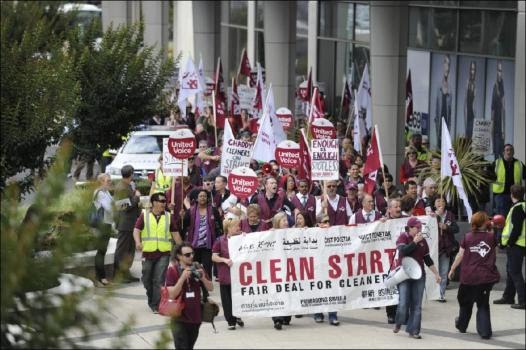
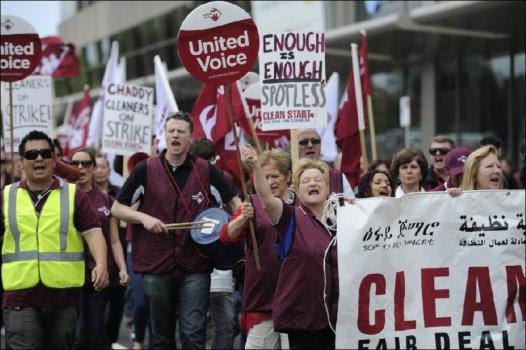
What happened yesterday is that cleaners went on strike at lunch time only for an hour or two and as they went out a large group of community supporters went in. Those in the photos include United Voice delegates who held their annual convention yesterday. As part of their training and skills development they were bussed down to Chadstone shopping centre to get some practice in community support action!


Apparently Westfield locked the doors to the Centre after about 80 community supporters had walked inside, leaving about another 80 demonstrating on the outside. In other capital cities including Adelaide, cleaners are taking short strike action supported by community including sit-ins, cavalcades around the centres, balloons, leafleting shoppers etc.


Spotless, backed by the Shopping Centre Council are showing no public signs of giving in, so it could be a long fight. The Shopping Centre Council is actually arguing for a reduction in retail workers’ wages through ‘freeing up’ penalty rates on weekends.

So it is not surprising to see them pushing a hard line on cleaners’ demands which include increasing the base rate from the award $16.57 per hour to $21.17 per hour which is the rate cleaners in the Clean Start CBD have won.

The irony is that Spotless are a party to the CBD Agreement and major players in the Shopping Centre Council like Colonial First State, Stockland and Dexus are ‘funding’ Clean Start rates in their commercial cleaning contracts in the CBD.

The difference between the CBD and retail shopping centres is that most of the workers in CBD offices are salaried or on EBAs and well paid compared with cleaners who clean those buildings.

But retail, thanks largely to the tame cat union Shop Distributive and Allied Employees Union (SDA) is a low wage industry with many workers on $17 per hour or less as junior rates apply in retail. There are no junior rates in the cleaning award.

The SDA, led for years by a right-wing Catholic clique, spends most of its time and a large chunk of membership fees in factional influence inside the ALP.

The biggest ‘threat’ to the big retailers is they don’t want an organized workforce and that is what campaigns like Clean Start give, an opportunity to organize.

A far sighted big retailer would have settled already, but maybe their reduced sales and retail slump over-ride their thinking.